Deep inside a secret workshop within The TerraDome Sports Science Research Centre…
A new story becomes formed around an idea:
To begin to learn BMX flatland, you must first begin to learn how to work for what you desire.
Therefore, a new edition of principles is being rehearsed by people acting out the directions before becoming The Actors.
The Field and the Seed — Yellow Belt Documentary
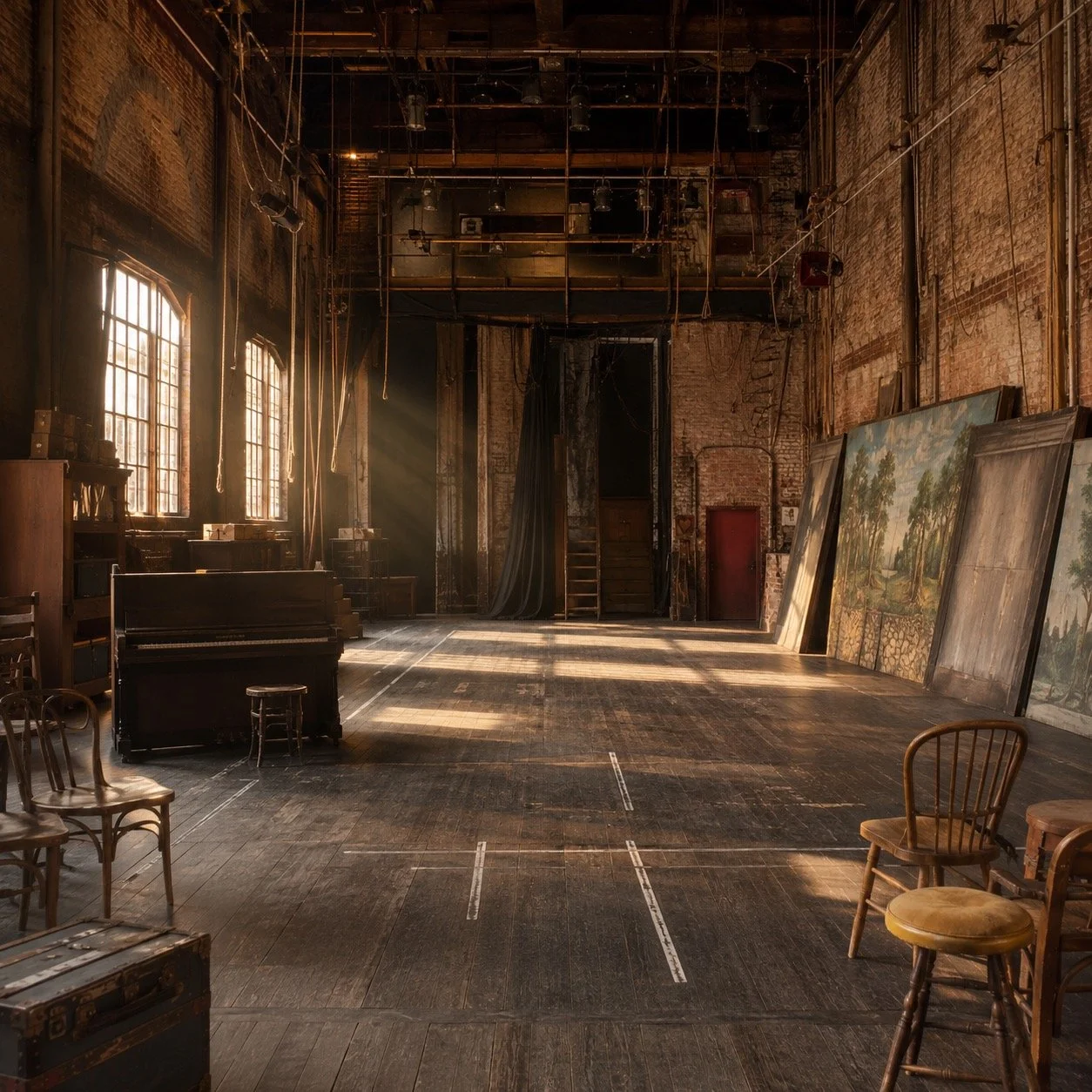
Scene 1 — The Empty Rehearsal Hall
Every worthwhile journey begins somewhere ordinary. Before there are actors, before there is applause, there is only an empty room waiting for careful work. This rehearsal hall has witnessed countless performances, but today’s lesson is different. Nothing here exists merely as scenery. Every chair, every rope, every mark upon the floor will become part of a language. Like an untouched field before sunrise, the room quietly asks a question: What kind of person will enter, and what kind will leave?
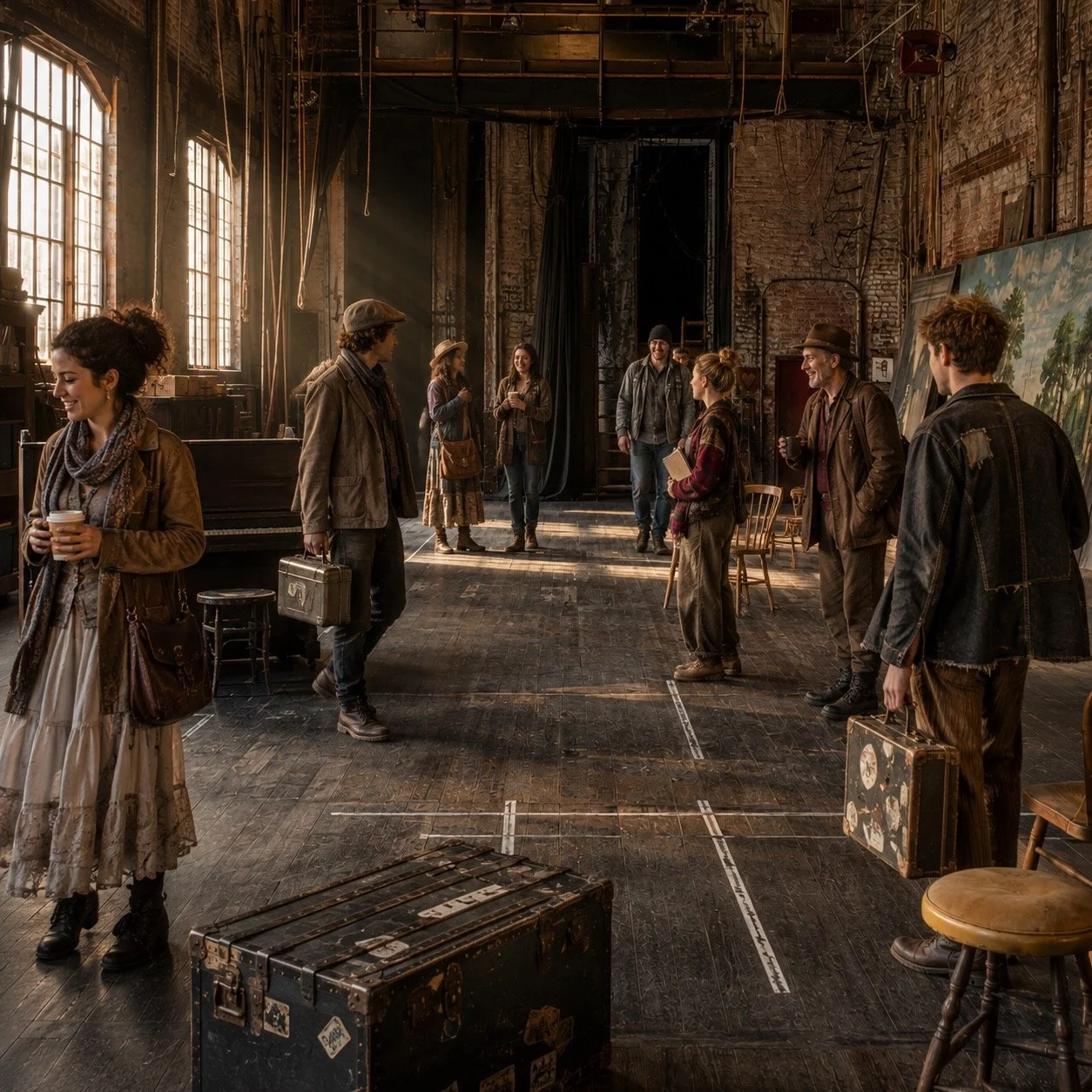
Scene 2 — The Cast Arrives
They arrive carrying ordinary things: coffee, notebooks, worn coats, patched bags, and unfinished mornings. No one appears exceptional. Their clothes do not match. Their lives are already full. They are students, workers, parents, dreamers, and skeptics. They have not gathered to become performers. They simply believe they are attending another rehearsal. None of them yet realizes that the play they are about to study has been unfolding inside their own lives for years without their noticing.
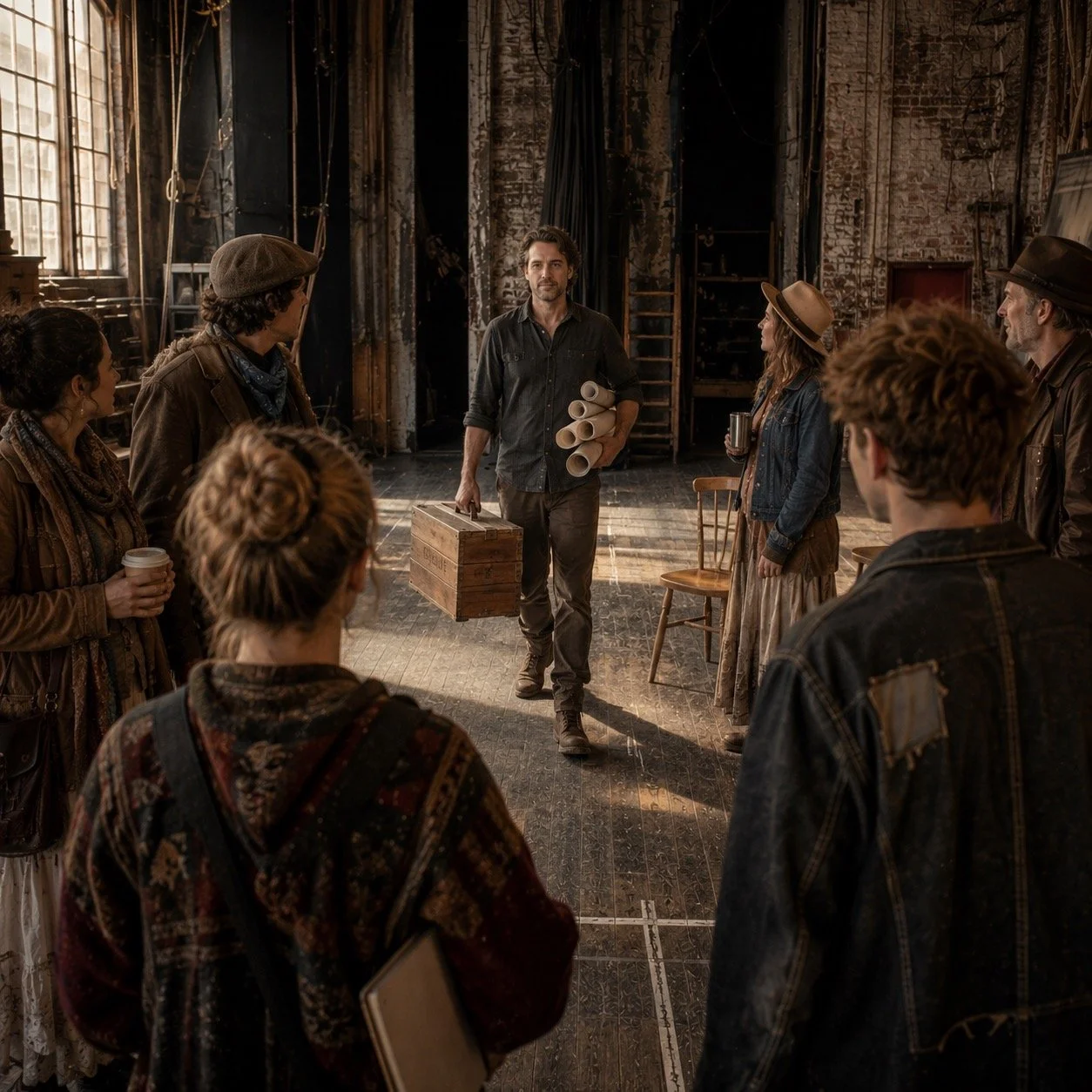
Scene 3 — The Director Appears
There is no introduction. No spotlight announces his arrival. The man carrying a wooden crate could easily be mistaken for another stagehand. Yet something changes as he enters. Conversations end without instruction. Eyes quietly follow him. Authority rarely announces itself with volume. It often arrives carrying simple tools and a clear purpose. Before a single lesson is spoken, everyone senses that this rehearsal will demand attention rather than performance, understanding rather than applause, patience rather than excitement.
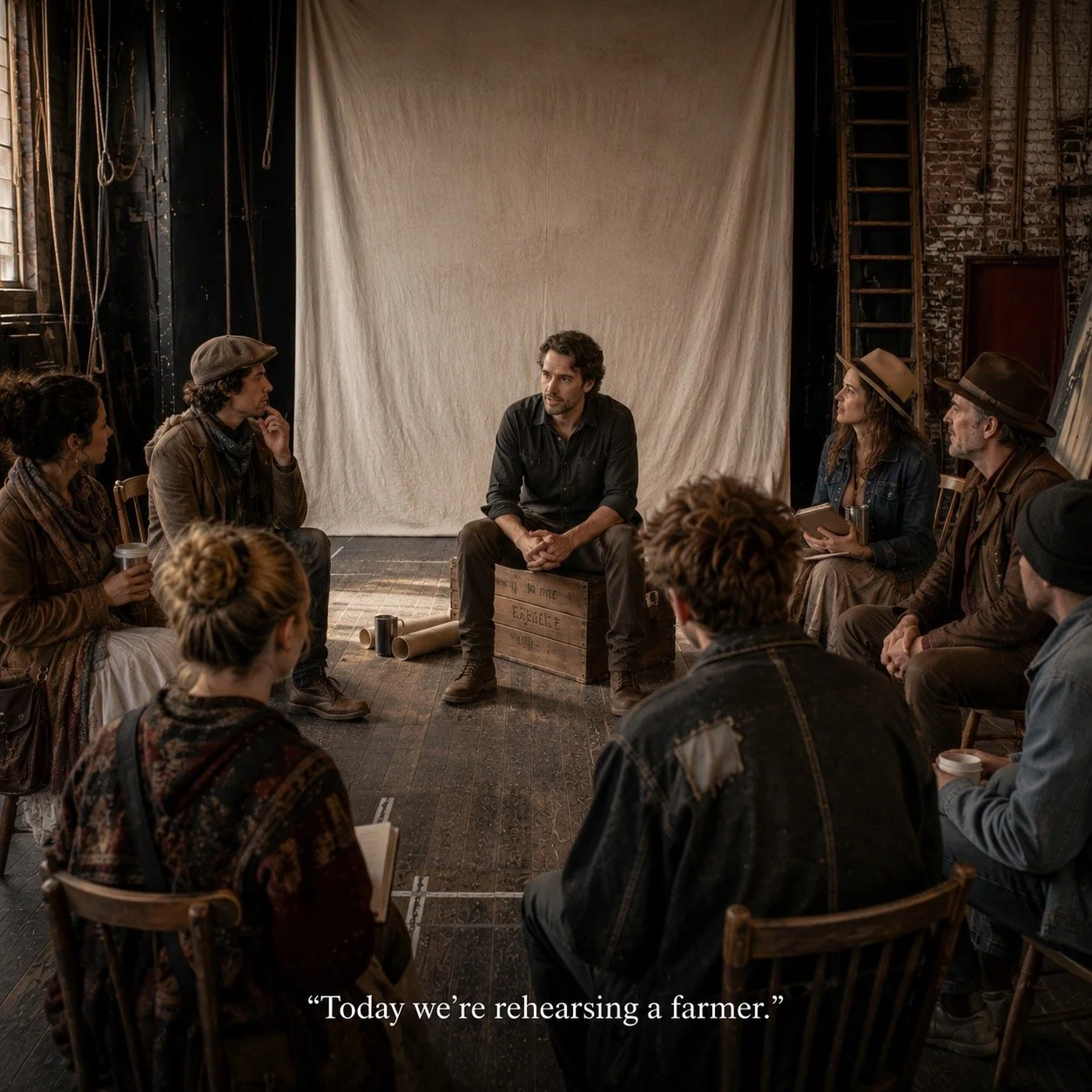
Scene 4 — The Assignment
The Director sits upon the crate as though nothing important is about to happen. Behind him hangs only an empty backdrop. Then he offers a sentence so simple it almost disappoints the room. “Today we’re rehearsing a farmer.” Confusion quietly spreads among the actors. They expected drama, spectacle, perhaps tragedy. Instead they have been given soil, labor, and patience. Sometimes the smallest assignment conceals the largest lesson. Great truths often arrive disguised as ordinary work.
Scene 5 — Watch For Five Things
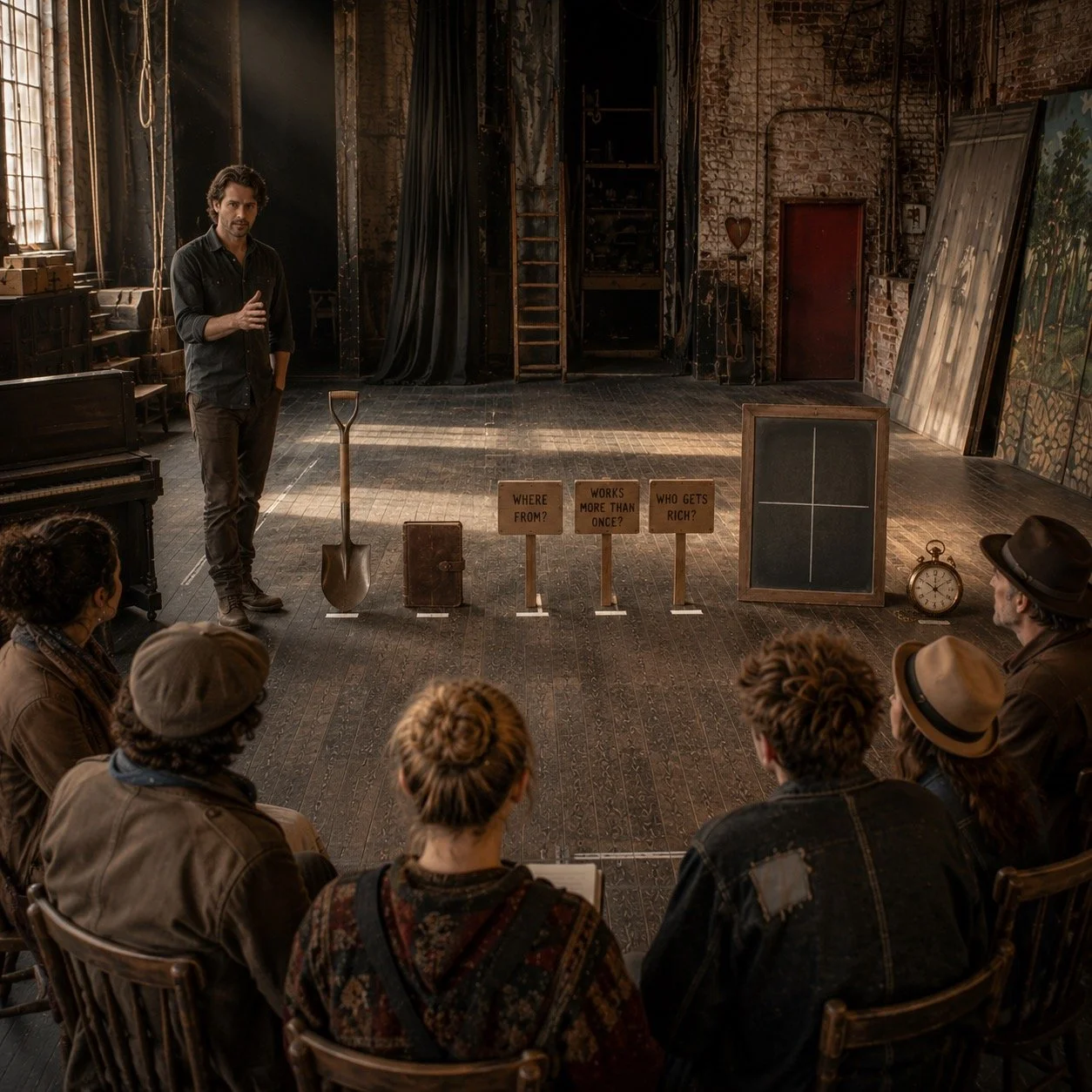
The Director says very little. Instead, he walks among five ordinary objects arranged across the room: a shovel, a notebook, three wooden signs, a chalkboard, and a pocket watch. He names none of them. He explains nothing. He asks only that everyone notice carefully. Wisdom often begins this way. Before we understand what something means, we must first learn to see that it exists. Attention always comes before understanding. Observation always comes before interpretation.
Scene 6 — The Ground
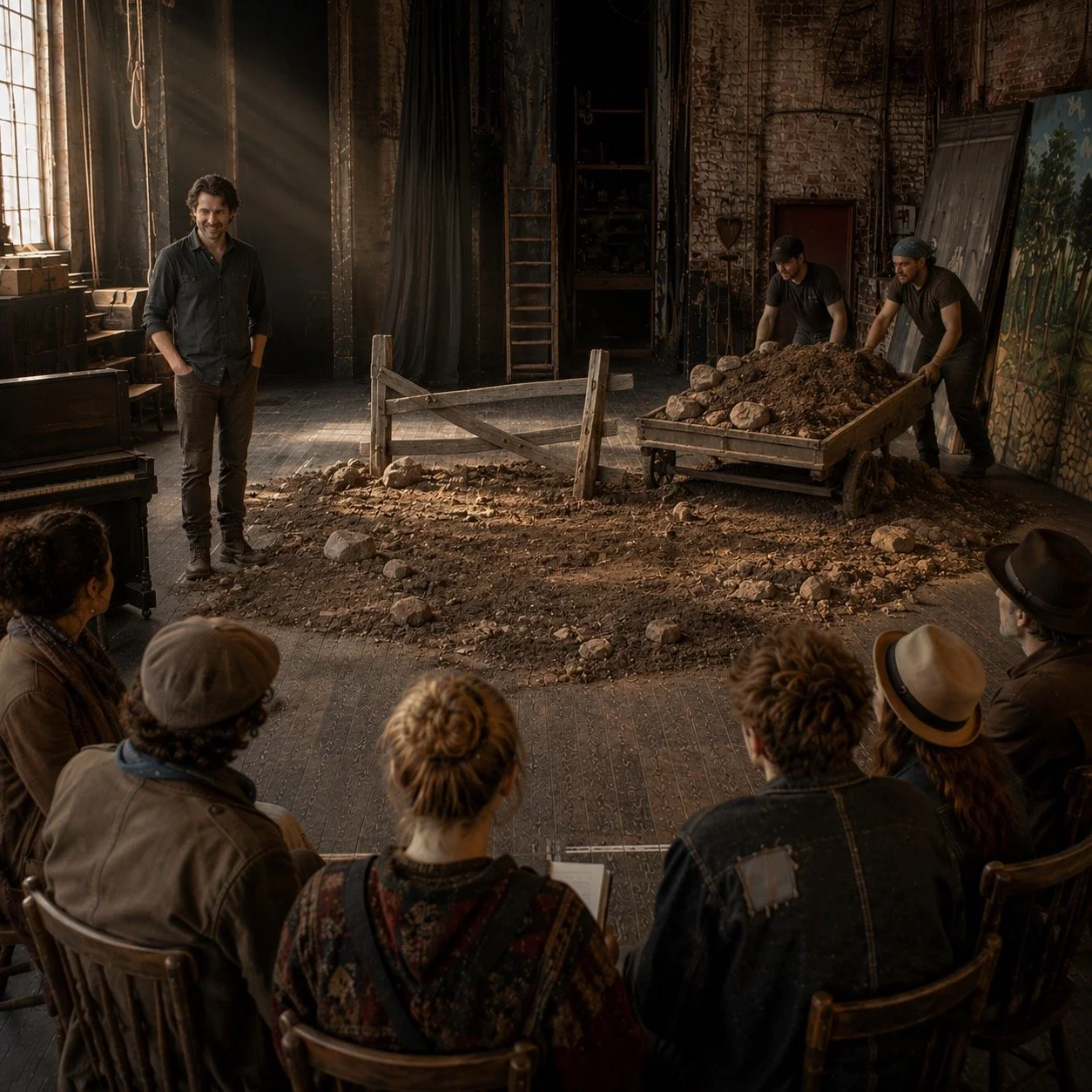
Stagehands roll in dirt, broken fencing, and scattered stones. The actors wait for something larger. Surely more scenery will follow. It never does. This unimpressive patch of earth is all the Director requested. He smiles as expectations quietly collapse. Every meaningful story begins with reality exactly as it is, not as we wish it were. Before anything can grow, someone must become willing to look honestly at the ground beneath their own feet.
Scene 7 — The Field Is Your Mind
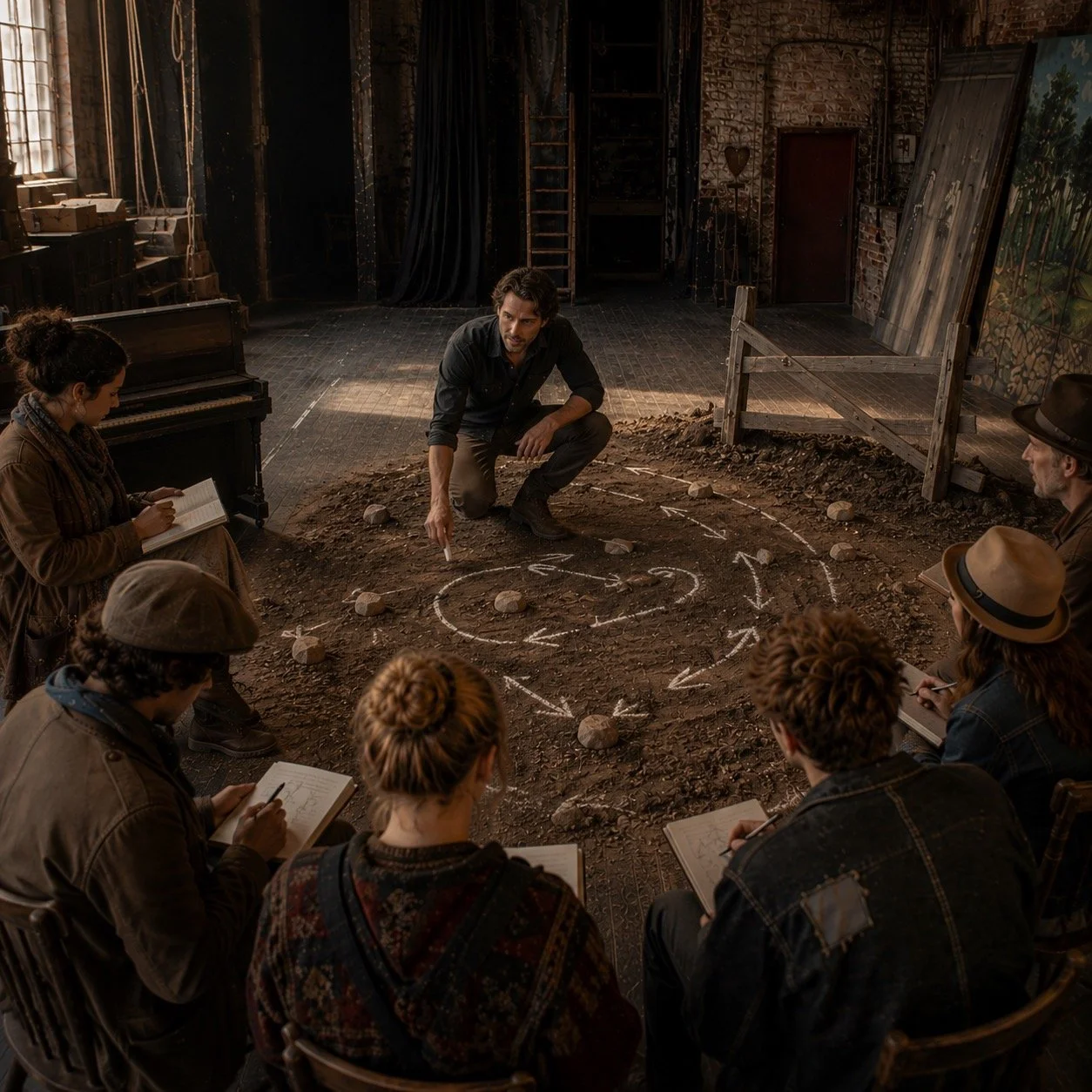
The Director kneels without ceremony. Chalk marks become paths. Stones become habits. Footprints become repeated choices. Suddenly the dirt is no longer pretending to be farmland. The actors realize they are watching an illustration of themselves. Pens begin moving across notebooks almost instinctively. Nothing supernatural has happened. Only perception has changed. The greatest transformation often begins the moment an ordinary object becomes a mirror instead of merely remaining an object.
Scene 8 — Morning Invocation
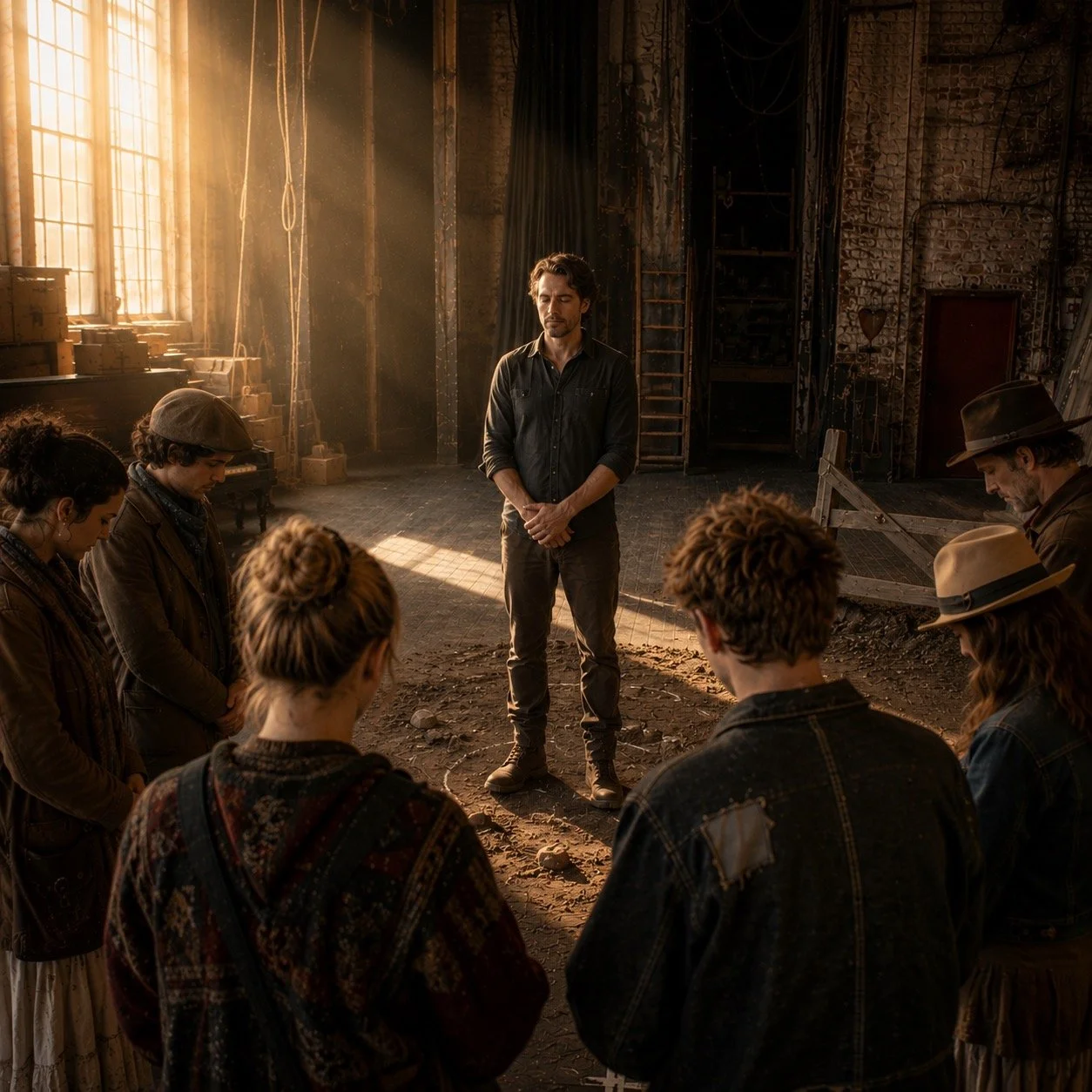
Nothing changes except the light. Sunrise pours through the rehearsal windows, and the Director simply stands in silence before beginning his work. No speech follows. No ritual is explained. Gradually the room grows quiet enough to hear itself. Every person senses that work is being prepared long before any labor begins. The first act of stewardship is not movement. It is orientation. Before we shape the day, we decide what kind of person will shape it.
Scene 9 — Seeds Everywhere
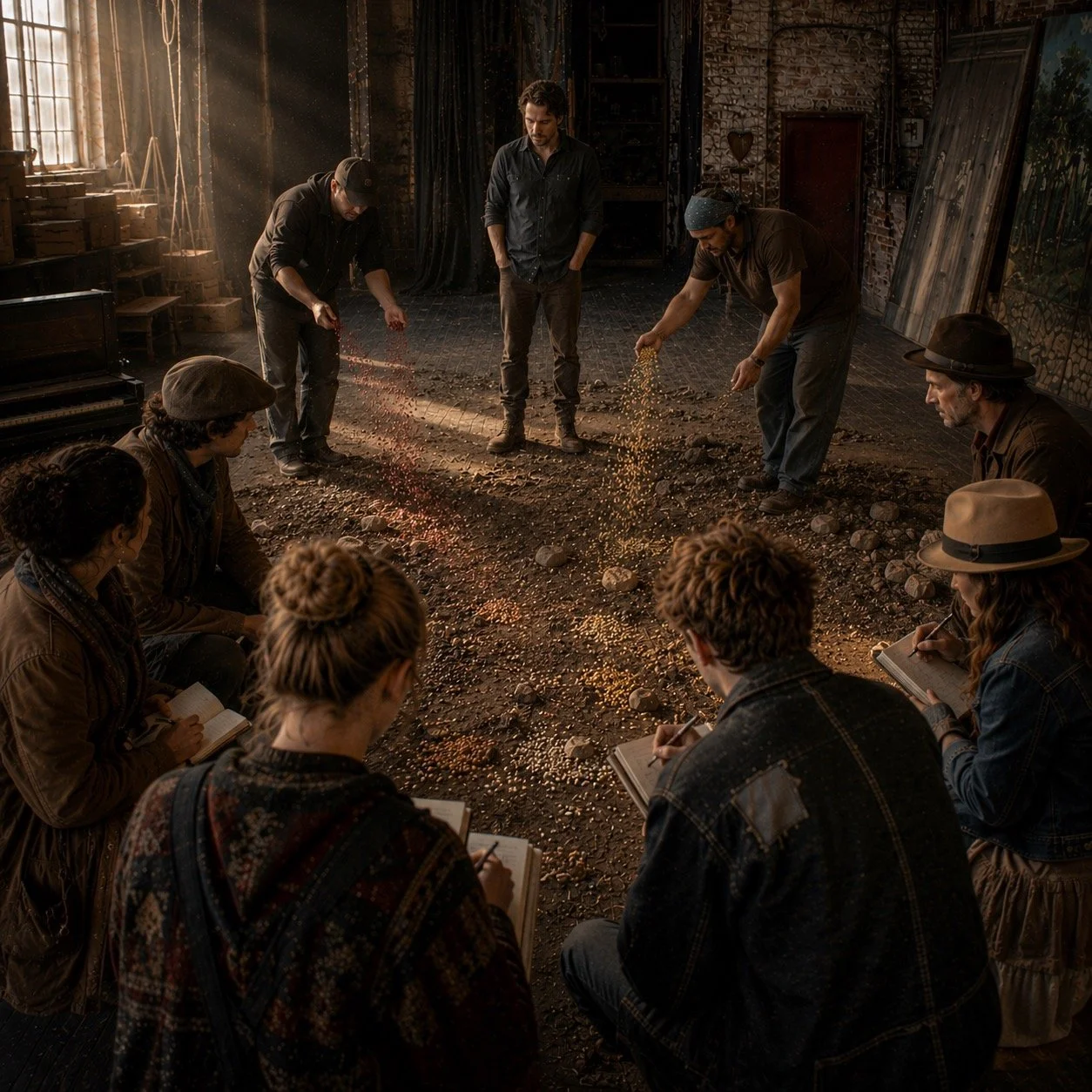
The stagehands begin tossing seeds without asking permission. They fall across the dirt from every direction. Some are bright. Some appear ordinary. None request approval before arriving. The actors suddenly understand something unsettling. Ideas behave exactly this way. Advice, opinions, entertainment, promises, fears—they all land somewhere. The field cannot prevent their arrival. It can only decide which ones receive attention, nourishment, and time. Every cultivated life begins by recognizing this quiet truth.
Scene 10 — The Three Tests
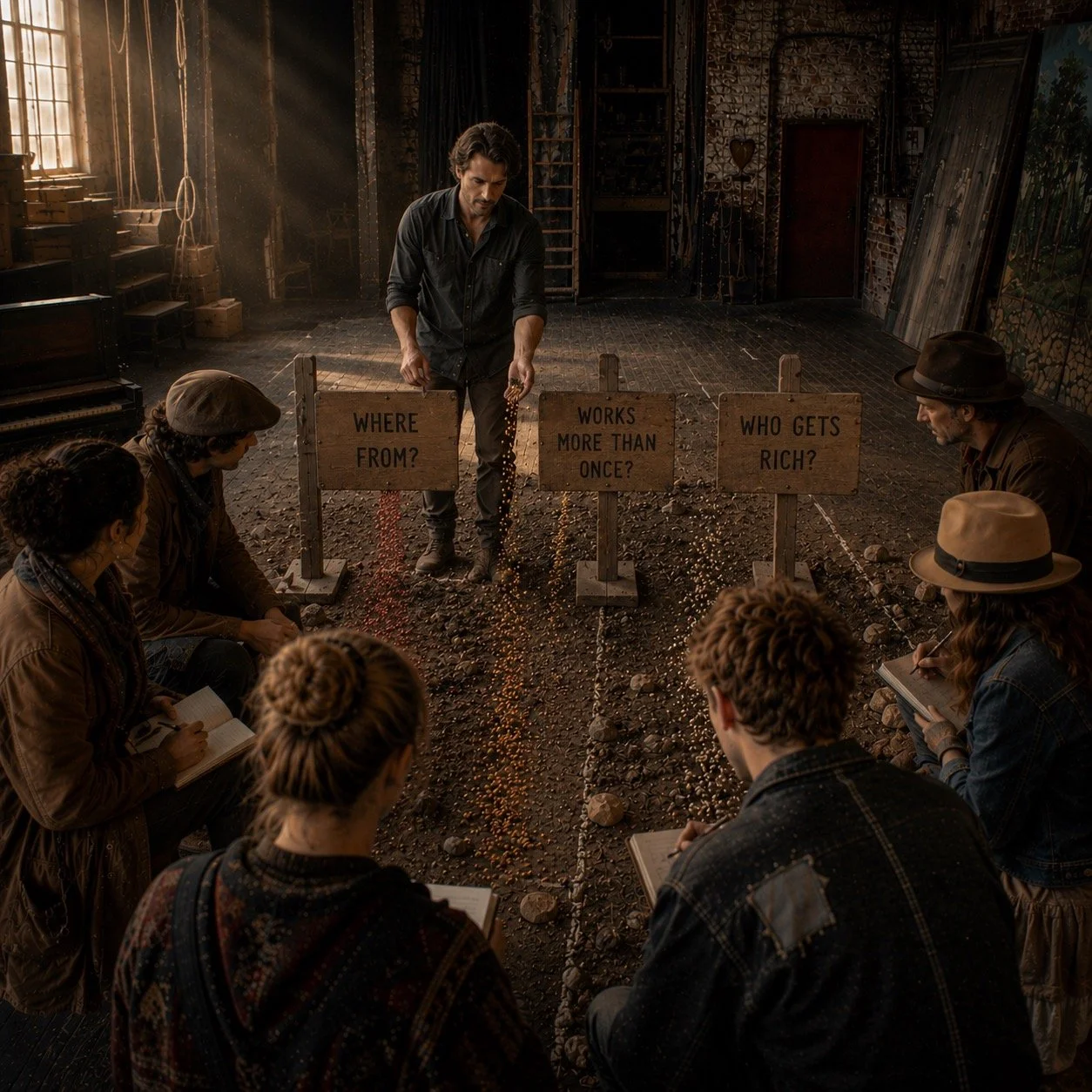
Three wooden signs form a simple gate. Every handful of seed passes through the same questions before moving forward. No exceptions. No shortcuts. The Director demonstrates patiently, never raising his voice. Soon the actors begin asking the questions themselves. Good judgment rarely depends upon intelligence alone. More often it depends upon possessing a trustworthy process before emotion has an opportunity to decide. Discernment is less about suspicion than about careful stewardship of attention.
Scene 11 — The Ledger
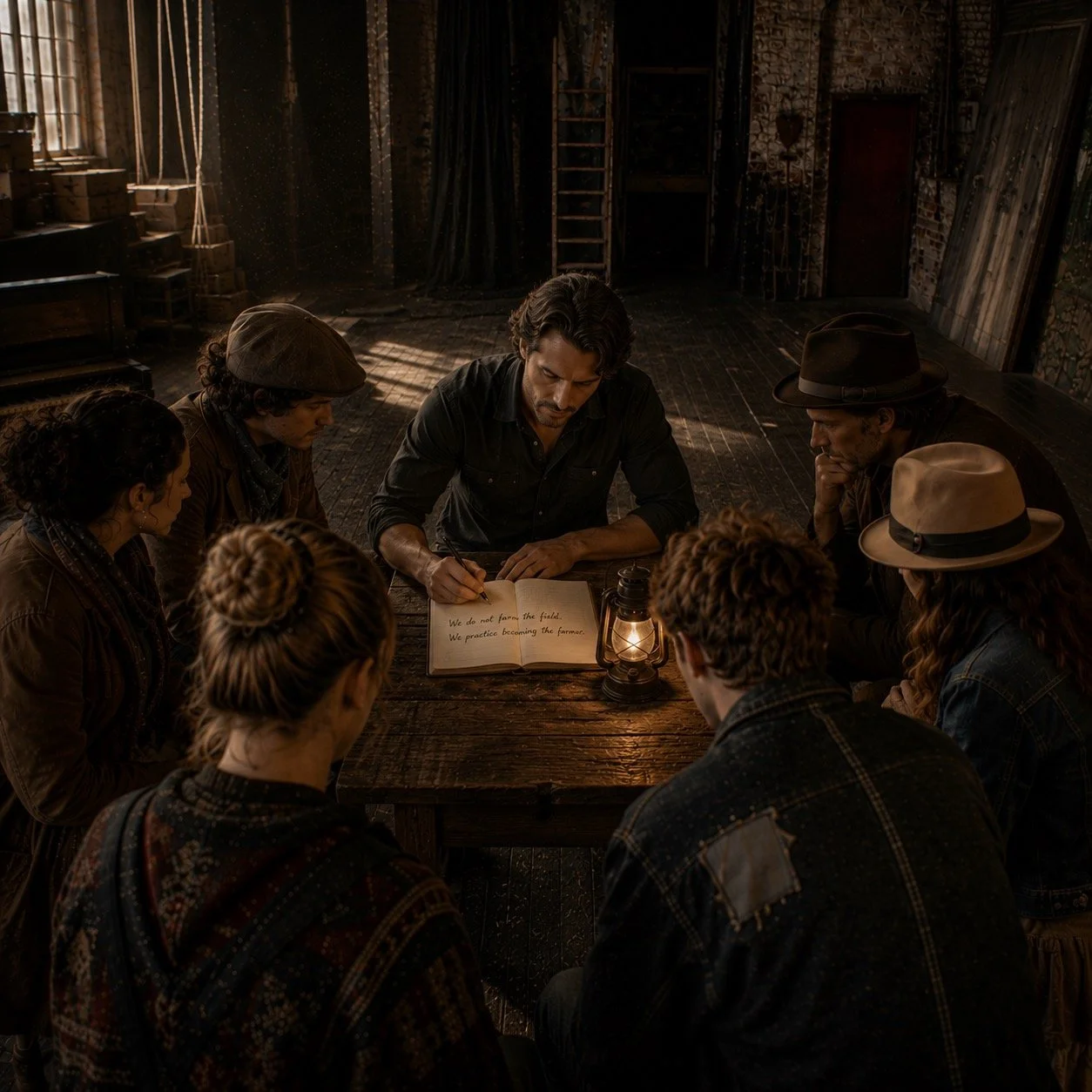
A small lamp glows against the morning light. An old notebook rests upon the table. The Director writes only a single sentence, slowly enough that everyone watches the movement of the pen. No one speaks. Records are not kept because memory is weak. They are kept because understanding grows through reflection. What is written becomes available for improvement. What remains unwritten quietly repeats itself, year after year, under the comforting disguise of experience.
Scene 12 — The Neighbor
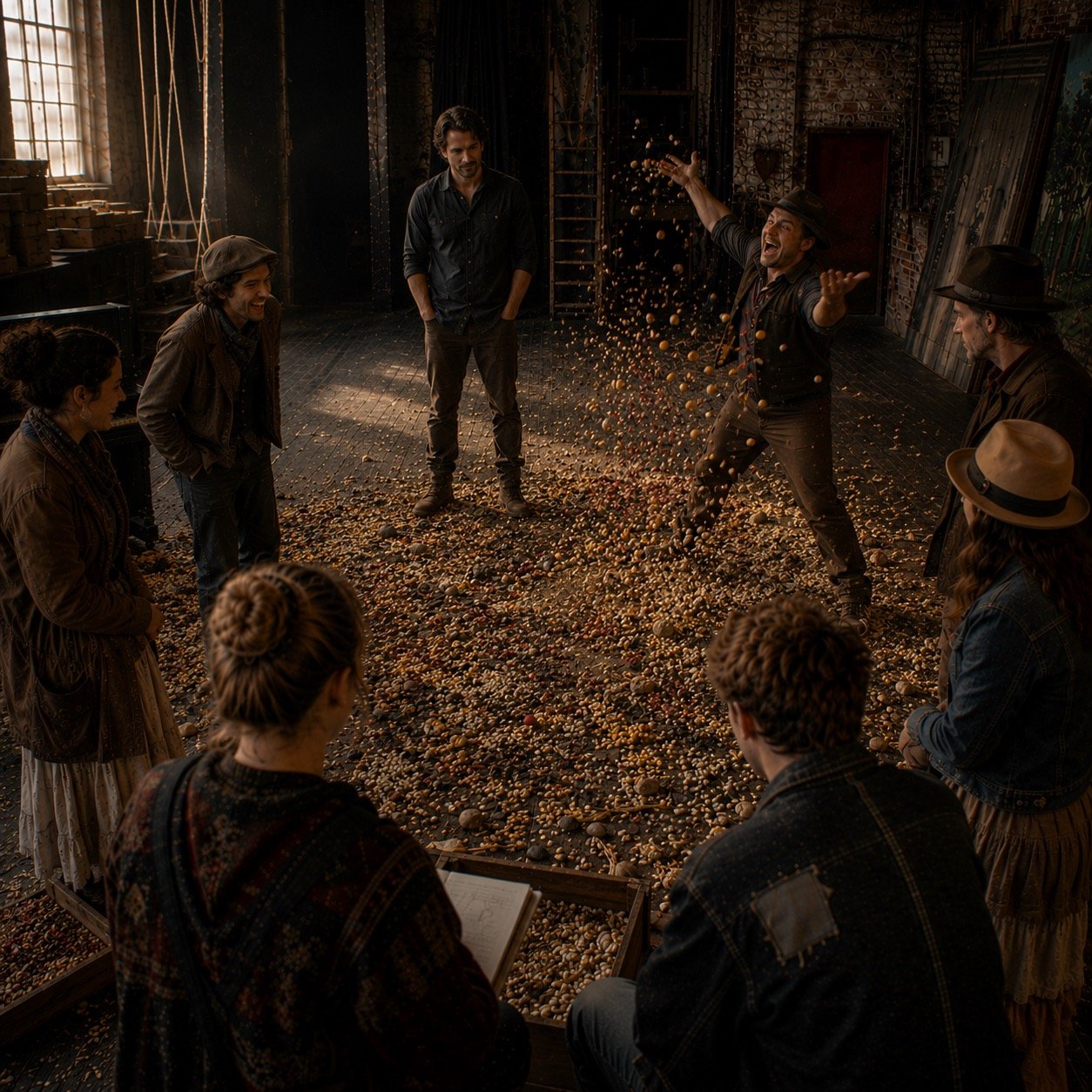
Another actor enters with enthusiasm overflowing. Seeds fly in every direction. The room laughs. The stage becomes wonderfully chaotic. For a moment the abundance seems exciting. Then the laughter slowly fades. Nothing can grow because everything has been planted. The lesson arrives without criticism. Disorder often begins looking like freedom. Wisdom rarely opposes abundance. It simply insists that every field eventually requires selection before it can produce anything worth harvesting.
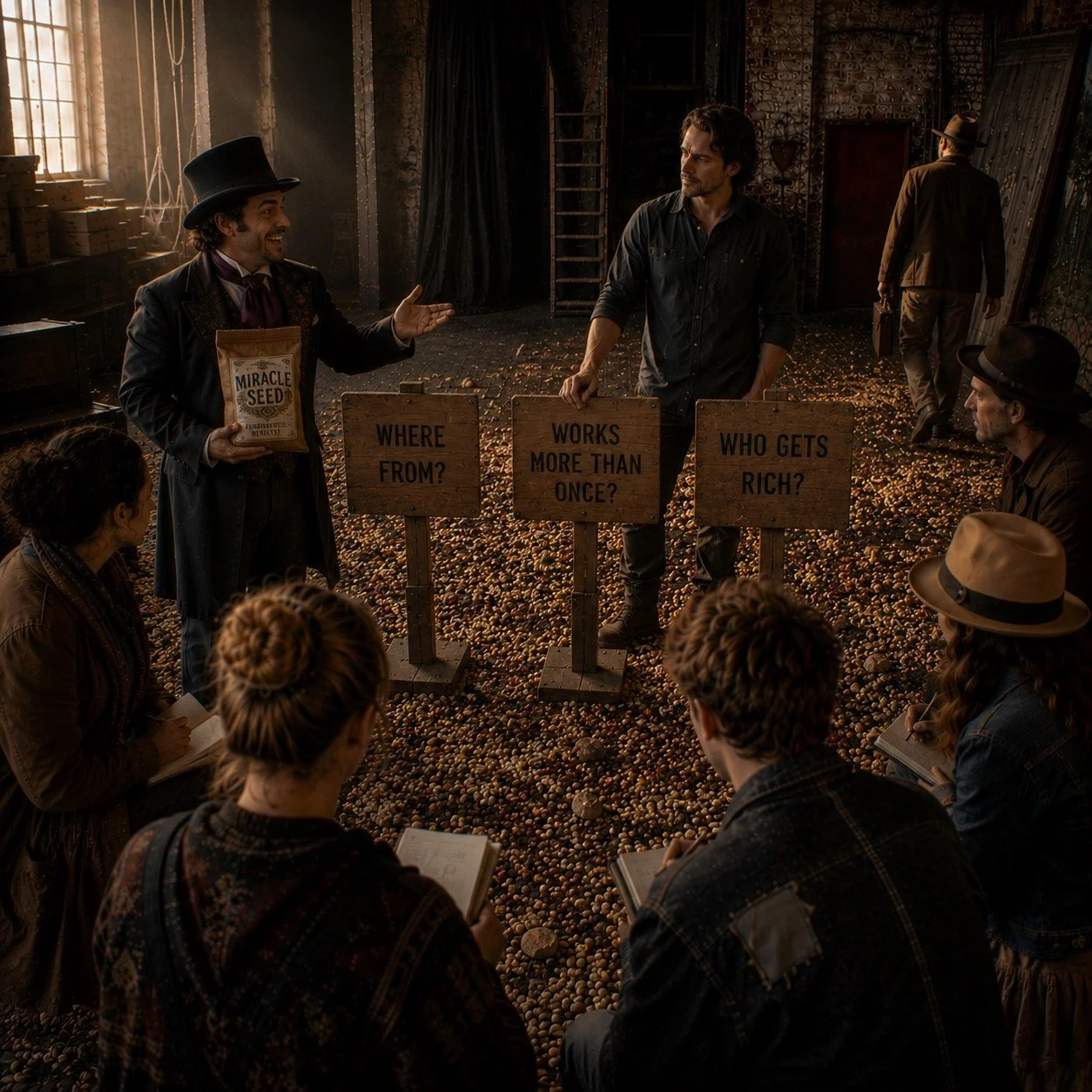
Scene 13 — The Merchant
The salesman is charming, confident, and wonderfully persuasive. His miracle seed promises effortless success. The Director never argues. He simply asks three familiar questions. One by one, the confidence quietly dissolves. Without anger or embarrassment, the merchant leaves exactly as he arrived. The lesson is surprisingly gentle. Discernment does not require defeating everyone who is mistaken. Often it simply means refusing to purchase what careful observation has already shown to be unreliable.
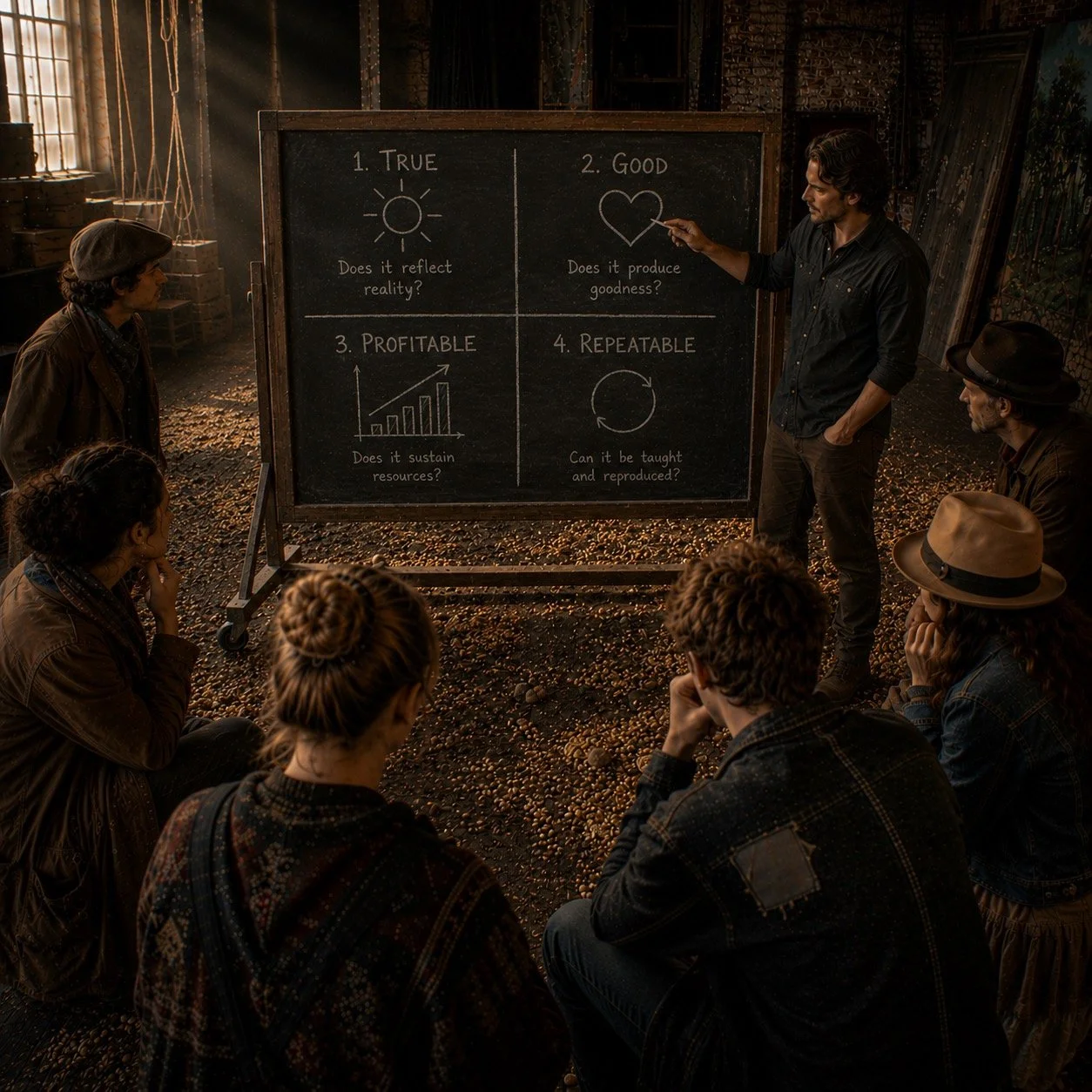
Scene 14 — The Matrix
A large chalkboard rolls into view. Four simple squares appear beneath the Director’s hand. No complicated lecture follows. Instead, the actors quietly gather around and stare. The drawing teaches before the words do. Great maps possess this unusual quality. They organize confusion before explaining it. Once reality has been arranged clearly enough to see, many decisions no longer require extraordinary intelligence. They merely require the courage to remain inside the truthful path.
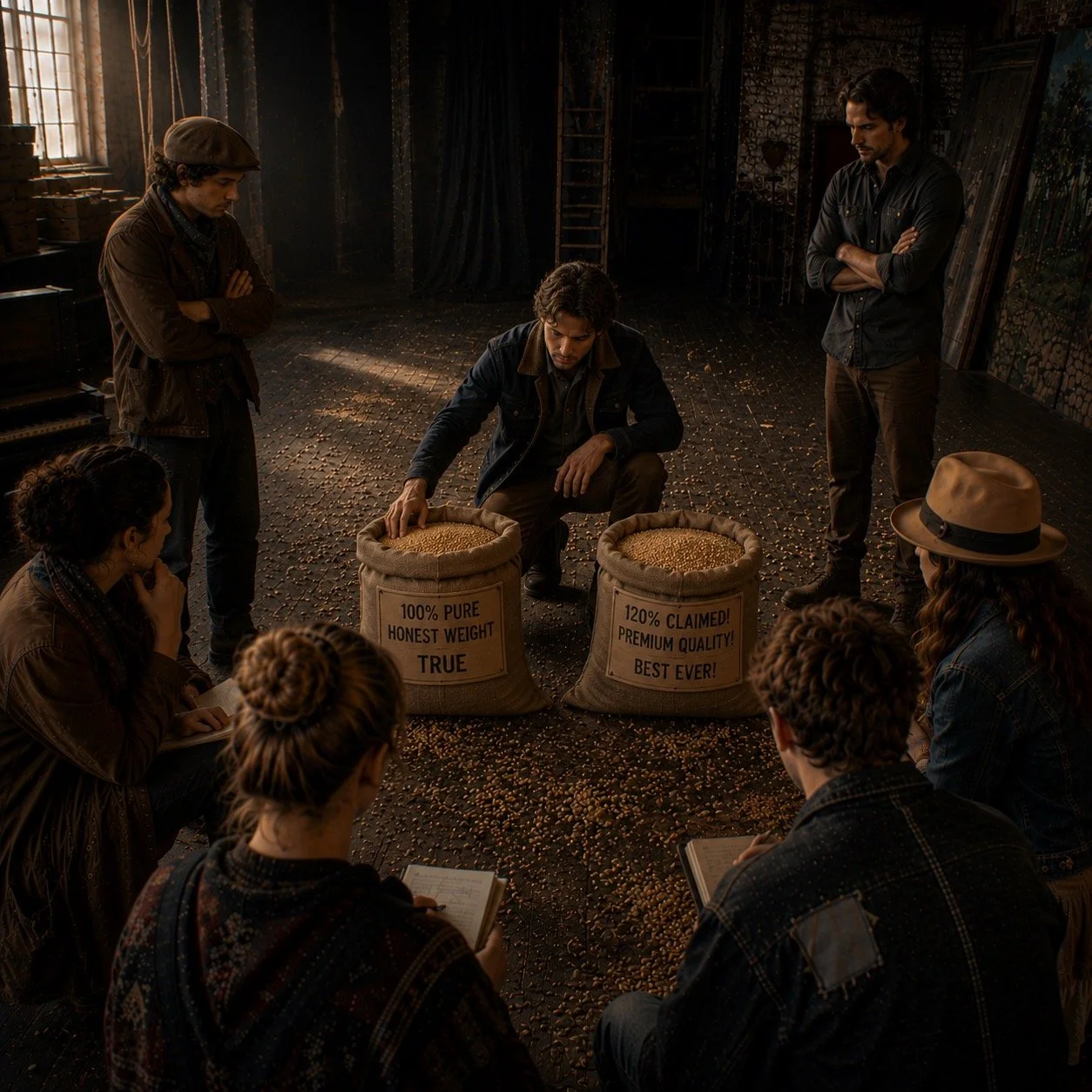
Scene 15 — True Even When It Costs
Two sacks stand side by side. They appear almost identical. One exaggerates. One tells the truth. The actor portraying the Farmer quietly reaches toward the honest one. No applause follows. No triumphant music rewards the choice. Only silence fills the room. Integrity rarely feels dramatic while it is happening. It often appears costly, unimpressive, and invisible. Yet every enduring harvest quietly traces its beginnings back to moments exactly like this one.
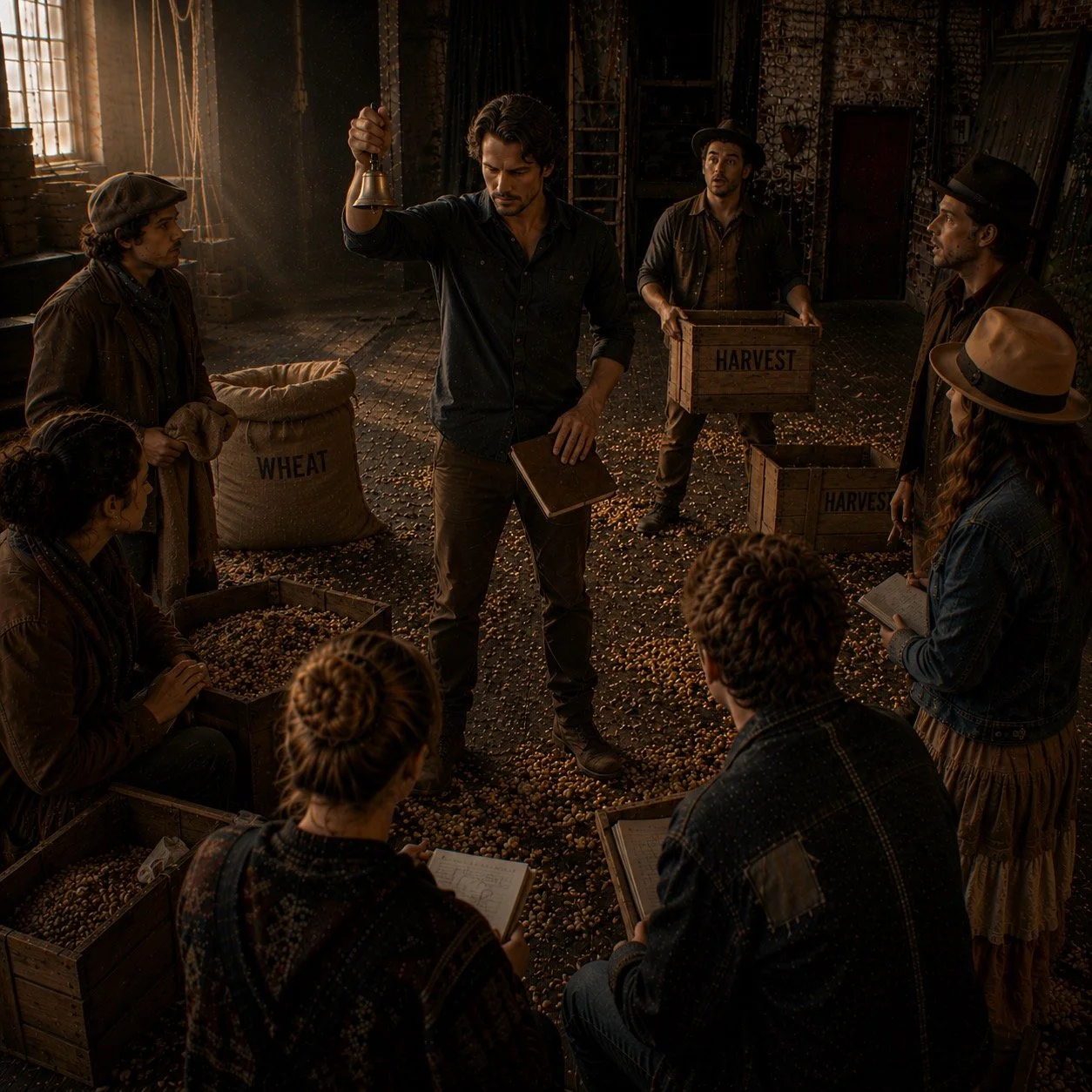
Scene 16 — The Hard Stop
A bell rings. Everyone freezes where they stand. Harvest appears unfinished. Work remains waiting. Yet the Director calmly closes his notebook. The lesson ends because the time has ended. Confusion spreads across the actors’ faces. Surely one more hour would help. Perhaps it would. Yet stewardship includes knowing when enough has become enough. A person unable to stop working has not mastered labor. Labor has quietly become the master instead.
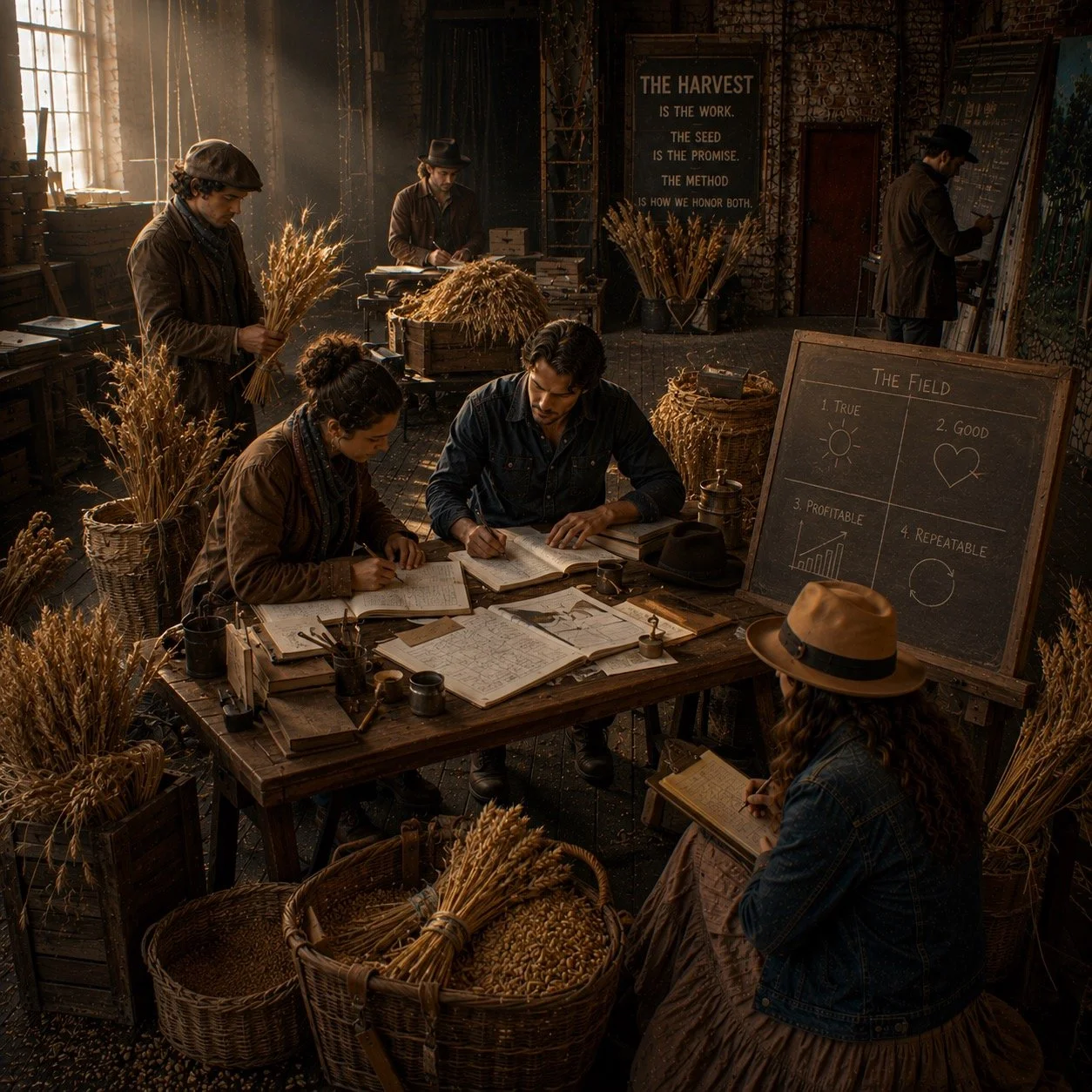
Scene 17 — Harvest
Nothing extravagant fills the rehearsal hall. There are no trophies, no cheering crowds, no grand celebration. Instead there are journals, baskets, healthy wheat, orderly tools, thoughtful diagrams, and people quietly working together. Patient habits have become visible. The room itself has changed shape because those inside it have changed first. A true harvest is rarely recognized by its abundance alone. It is recognized by the order, peace, and faithfulness that produced it.
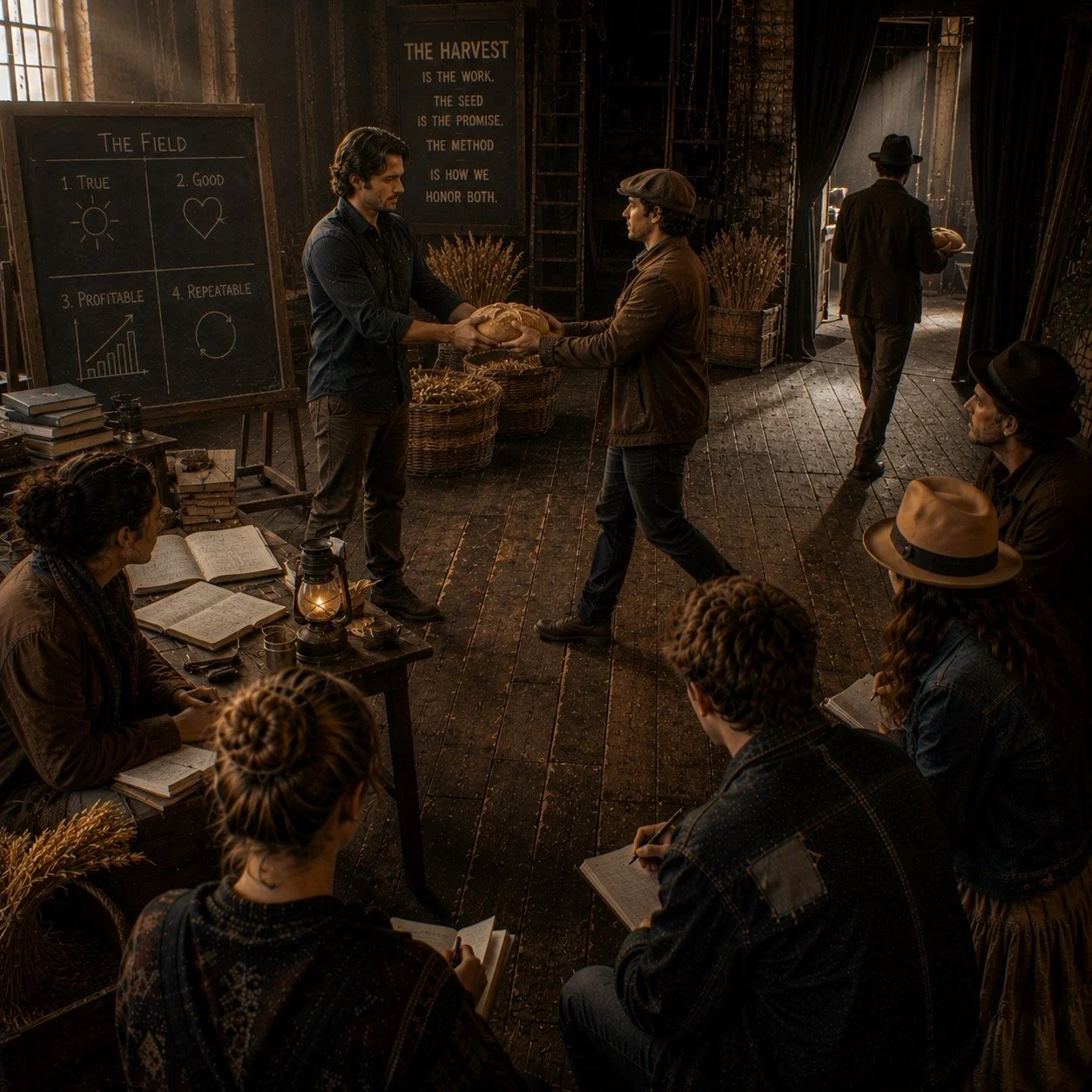
Scene 18 — Bread Travels
The Director places a loaf of bread into another actor’s hands. Without explanation, the actor disappears into the wings. Moments later, someone entirely different enters carrying the same loaf from another direction. No dialogue is needed. Every person understands. Good work continues beyond the sight of its maker. Faithful seed often nourishes lives the sower will never meet. Influence travels farther than reputation, and generosity reaches farther still.
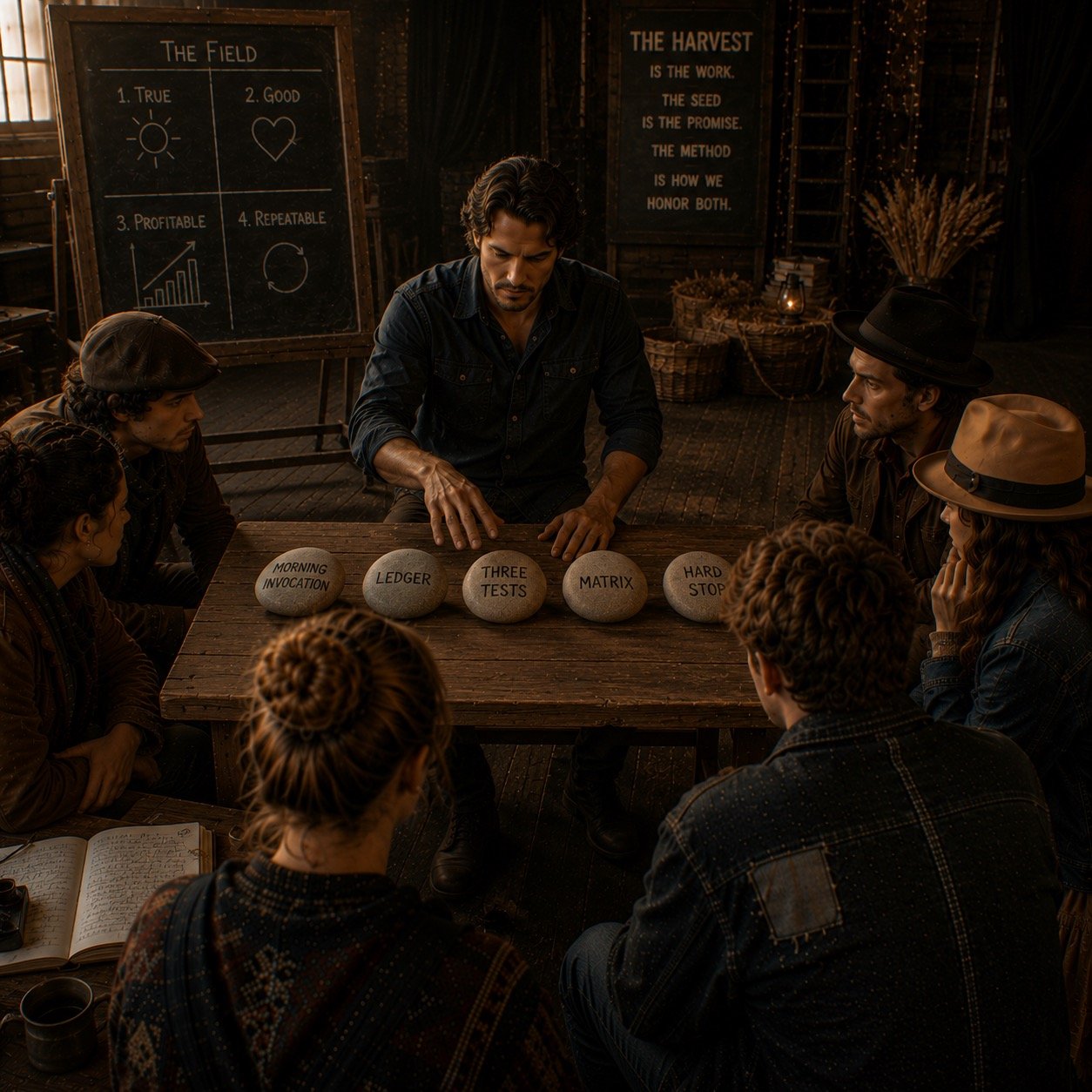
Scene 19 — The Five Stones
Five smooth stones rest quietly upon the wooden table. Morning Invocation. Ledger. Three Tests. Matrix. Hard Stop. Hours earlier they were only ordinary objects. Now every face recognizes them immediately. The actors no longer see props. They see practices. The room has taught them to attach meaning to simple things. That is how wisdom usually survives across generations. Not through complexity, but through memorable patterns small enough to carry every day.
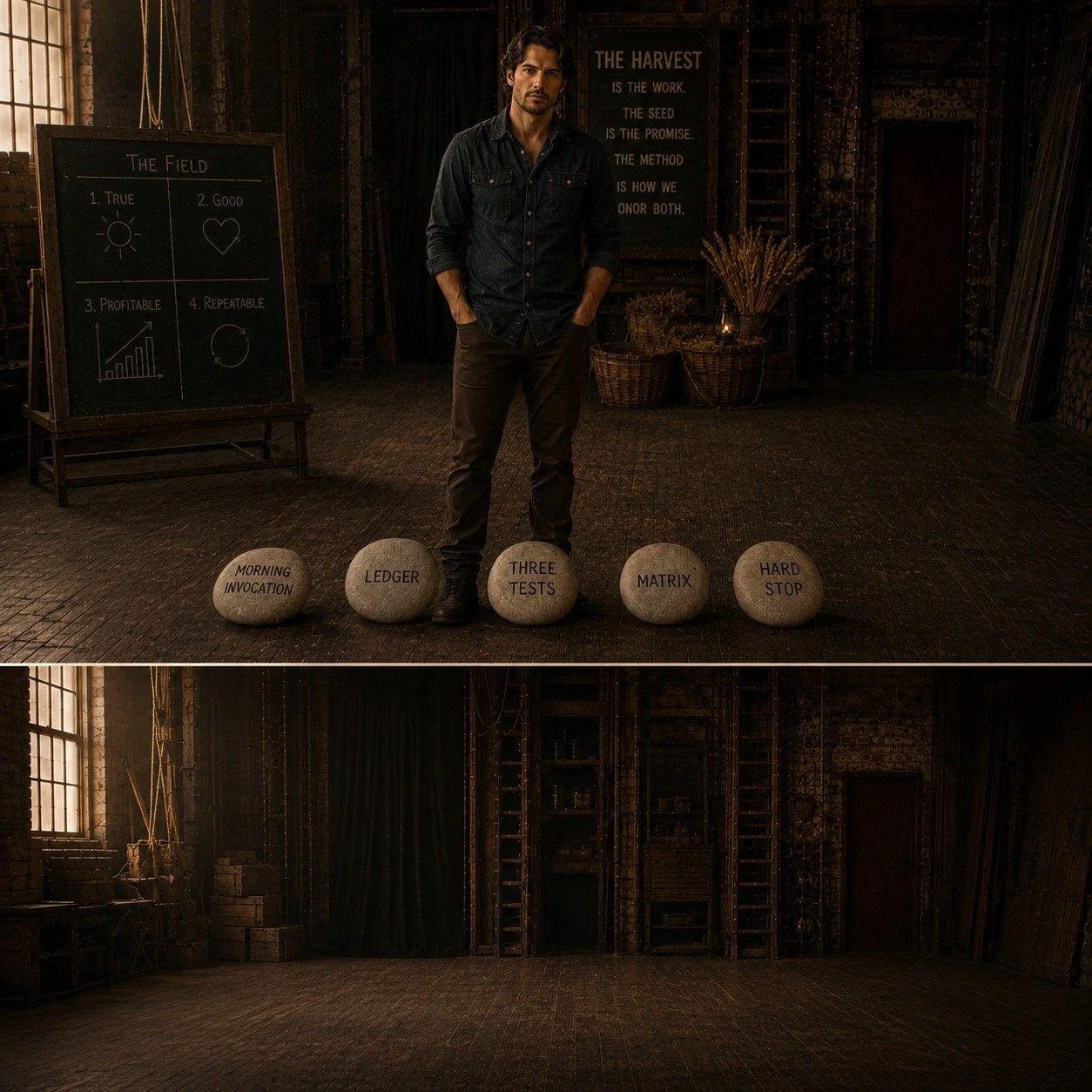
Scene 20 — The Final Question
The rehearsal hall becomes quiet once again. Everyone has gone home. Only the Director remains, standing where the lesson began. Behind him sit the same ordinary objects that greeted the audience this morning. Nothing magical has happened here. Only careful attention. He looks directly toward us and reminds us that the field was never merely a field. Then comes the final question, one only we can answer: What is growing in yours?